
Tomato juice
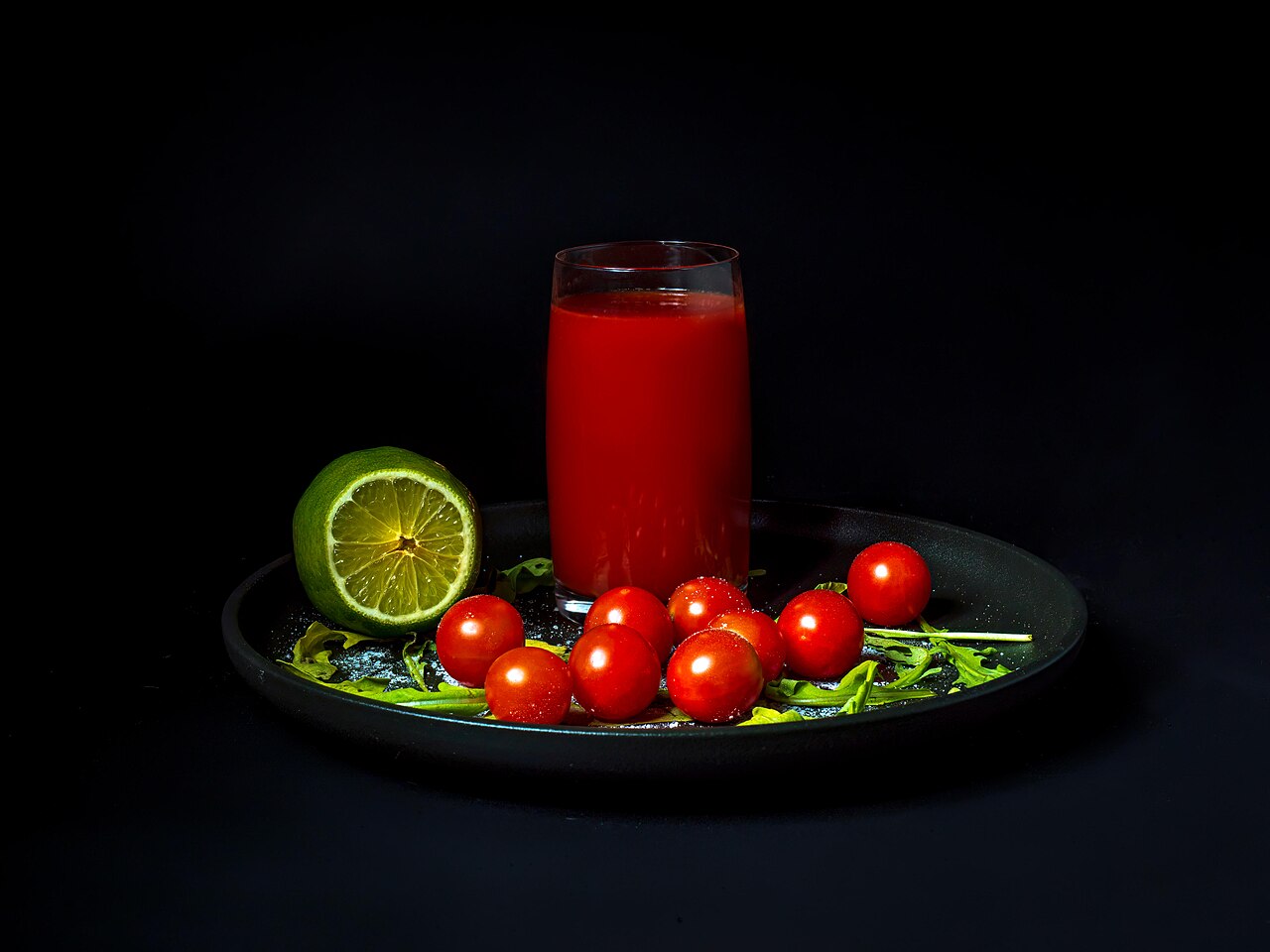
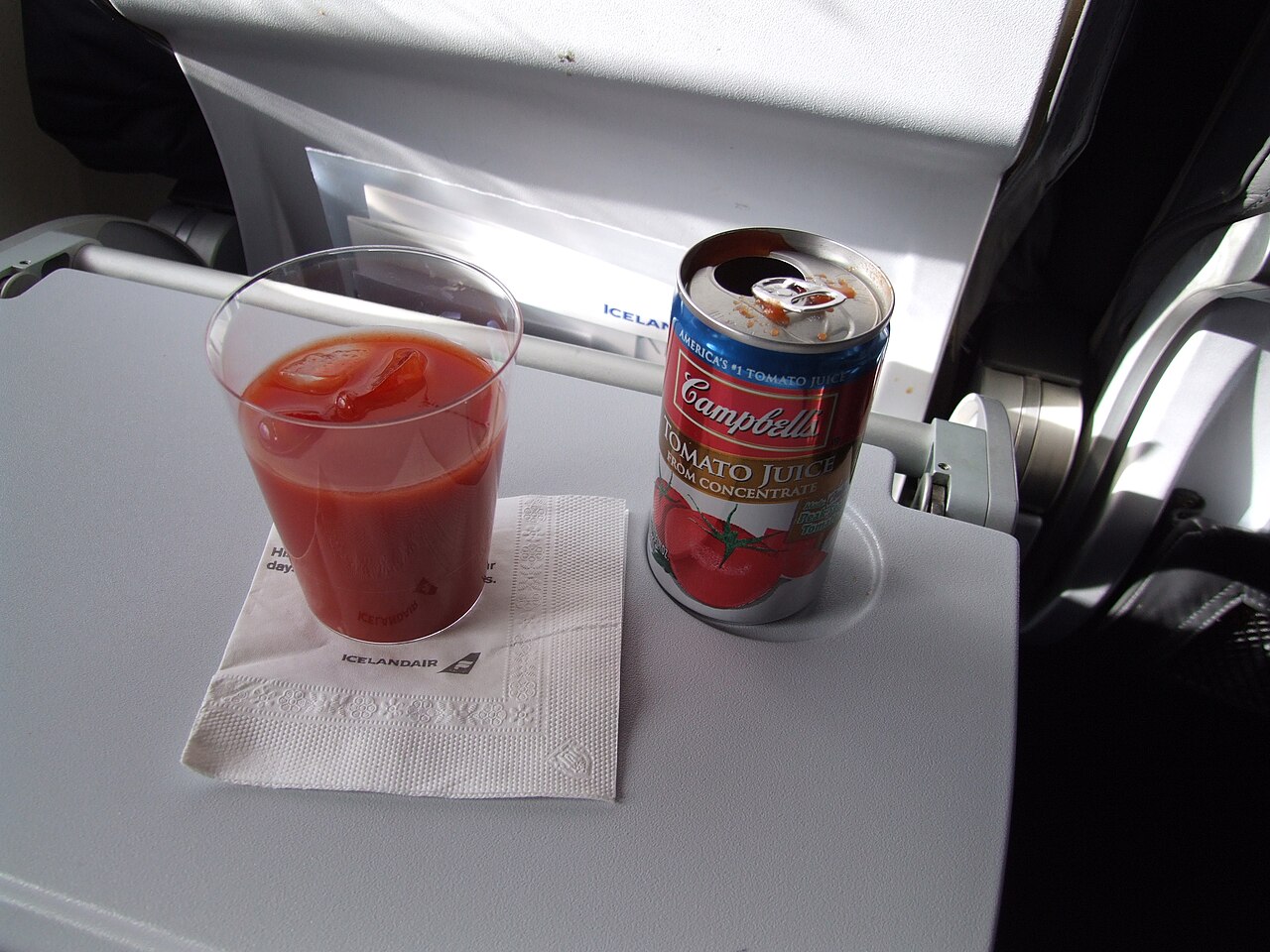
Tomato juice is a beverage made from tomatoes, often used in cocktails.

VSerebrenikov · CC BY-SA 4.0
Tomato juice is a beverage made from tomatoes, often consumed on its own or used in cocktails like the Bloody Mary, Caesar, or Michelada. Its first recorded use as a drink was in 1917 at the French Lick Springs Hotel in Indiana, where Louis Perrin mixed squeezed tomatoes with sugar. The drink became popular quickly after Chicago businessmen spread the word. In the United States, mass-produced tomato juice hit the market in the mid-1920s and became a common breakfast drink within a few years.
Production methods differ by country. In the U.S., most commercial tomato juice is made from tomato paste, though pressing whole tomatoes is also allowed. The tomatoes must be ripe—measured by a color standard on the finished product—mostly free of blemishes, and mostly deseeded. The juice must have a total solid content above 5.0%, with no added water. Salt and organic acidulants are permitted, and contrary to some claims, sweeteners are not prohibited by U.S. FDA standards of identity. In Canada, both concentrated and unconcentrated tomato juice are allowed, with similar requirements; sweetening agents, citric acid, and salt are permitted. Reconstituted juices must be clearly labeled.
Tomato juice has many uses. In Canada, it is commonly mixed with beer and called a Red Eye (or Bloody Beer), while the Calgary Red-Eye is a specific variant that often includes a whole egg. In Mexico, the broader category is 'Cerveza preparada,' with the Michelada being a popular specific type that typically includes lime, hot sauce, and other seasonings. It is the base for Bloody Mary and Bloody Caesar cocktails, as well as the mixer Clamato. In the UK, it is often combined with Worcestershire sauce, and in Germany, it is a base for the Mexikaner mixed shot. Chilled tomato juice was once a popular appetizer in U.S. restaurants. It is also frequently used as a packing liquid for canned tomatoes, though tomato purée sometimes replaces it for international trade due to tariff differences. According to Cook's Illustrated, tomatoes packed in juice taste fresher than those in purée. In microbiology, tomato juice is used to make tomato juice agar for culturing Lactobacillus species. Among airplane passengers, tomato juice is a popular drink; a small study by Yan and Dando suggests this may be due to enhanced umami perception in the loud, pressurized cabin environment, though another explanati
- first_served_as_beverage
- 1917
- first_served_by
- Louis Perrin
- first_served_at
- French Lick Springs Hotel, southern Indiana
- mass_production_began
- mid 1920s (United States)
- common_uses
- beverage, cocktail base (Bloody Mary, Caesar, Michelada), beer mixer (Red Eye, Bloody Beer, Cerveza preparada), packing liquid
Lore & Background
Tomato juice was reportedly first served as a beverage in 1917 by Louis Perrin at the French Lick Springs Hotel in southern Indiana. His combination of squeezed tomatoes and sugar became an instant success as Chicago businessmen spread the word about the tomato juice cocktail. Before that, tomato juice was strained after the tomatoes were juiced, and the result was then used for sauce, syrup and wine, but not as a drink.
In the United States, mass-produced tomato juice began to be marketed in the mid 1920s, and became a popular breakfast drink a few years thereafter. Most commercial tomato juice in the U.S. is made from tomato paste, though pressing is allowed. The tomatoes must be ripe, mostly blemish-free, and mostly deseeded, with total solid content over 5.0% and no added water. Salt and organic acidulants are allowed, and contrary to some claims, sweeteners are not prohibited by U.S. FDA standards of identity. In Canada, both concentrated and unconcentrated tomato juice are allowed; sweetening agents, citric acid, and salt are permitted. The beer-and-tomato-juice combination is most commonly called a Red Eye or Bloody Beer, while the Calgary Red-Eye is a specific variant often made with a whole egg. In Mexico, the classic mix falls under the broader category of 'Cerveza preparada,' with the Michelada being a well-known specific type that typically includes lime, hot sauce, and other seasonings.
Reader's Guide
Tomato juice holds significance as a versatile beverage and cocktail ingredient, with its modern form as a drink originating in 1917 at the French Lick Springs Hotel. Its commercial success in the United States began in the mid 1920s, establishing it as a popular breakfast drink and later as a key component of iconic cocktails like the Bloody Mary and Bloody Caesar. The production standards in the U.S. and Canada reflect regulatory differences, particularly regarding sweeteners and concentration methods, which influence the product's taste and labeling. Tomato juice's use extends beyond drinking: it serves as a packing liquid for canned tomatoes, where it is often preferred for its fresher taste compared to purée, and is used in microbiology to culture Lactobacillus species. Its popularity among airplane passengers has been studied, with research suggesting that the loud, pressurized cabin environment enhances the perception of umami flavor, though tradition may also play a role. The legacy of tomato juice lies in its transformation from a cooking ingredient to a standalone beverage and cocktail staple, with regional variations in preparation and consumption across North America, Europe, and Mexico.
Did You Know?
- Tomato juice was reportedly first served as a beverage in 1917 by Louis Perrin at the French Lick Springs Hotel in southern Indiana.
- In the United States, mass-produced tomato juice began to be marketed in the mid 1920s and became a popular breakfast drink a few years thereafter.
- In Canada and Mexico, tomato juice is commonly mixed with beer; the concoction is known in Canada as Calgary Red-Eye and in Mexico as Cerveza preparada.
- A small study by Yan and Dando hints that tomato juice's popularity among airplane passengers is due to an increased perception of umami flavor in the loud and pressurized cabin environment.
From Kitchen Ingredient to Bar Staple: The Birth of Tomato Juice as a Drink
Long before it became a fixture in bars and breakfast tables, tomato juice was relegated to the kitchen as a raw material for sauces, syrups, and even wine. The fruit was juiced and strained, but the resulting liquid was never meant to be drunk straight. That changed in 1917, when Louis Perrin at the French Lick Springs Hotel in southern Indiana began pouring a concoction of squeezed tomatoes, sugar, and a proprietary sauce into glasses for his guests. The novelty caught fire almost overnight; Chicago businessmen who sampled it carried the word back to their city, and the tomato juice cocktail quickly gained a devoted following. The commercial wave followed soon after. In the mid-1920s, mass-produced tomato juice hit American grocery shelves, and within a few years it had cemented itself as a recognized breakfast beverage. What had been a single hotel bar curiosity in one Indiana town transformed, in roughly a decade, into a household staple across the country.
Production Standards and Regulatory Differences
The manufacture of tomato juice is governed by specific agricultural and chemical rules that vary by country. In the United States, the majority of commercial tomato juice is produced from tomato paste, though direct pressing of the fruit is also permitted. Source tomatoes must meet strict criteria: they must be ripe, judged by a color standard applied to the finished product, largely free of blemishes, and mostly deseeded. The final liquid must contain more than five percent total solids, and no added water is permitted. Producers may include salt and organic acidulants for flavor, but sweeteners are explicitly prohibited. In practice, many manufacturers go further, blending in onion powder, garlic powder, and assorted spices to build a more complex taste profile. Canada takes a different regulatory path: its tomato juice must be unconcentrated and pasteurized. The Canadian rules are broadly similar in spirit but do permit a sweetening agent alongside citric acid and salt. Any reconstituted juice sold in either market must carry a clear label identifying it as such.
A Global Cocktail Ingredient
Few juices have woven themselves into the international cocktail lexicon as thoroughly as tomato juice. It serves as the foundational mixer in the Bloody Mary and the Bloody Caesar, two drinks that have become fixtures of brunch culture worldwide. The Michelada, a Mexican bar staple, also leans on tomato juice as a core component. In the realm of commercial mixers, Clamato has built an entire brand identity around tomato juice as its base. The beverage's versatility extends well beyond classic cocktails. In Canada and Mexico, tomato juice is frequently poured into a glass of beer, producing what Canadians call a Calgary Red-Eye and what Mexicans know as Cerveza preparada. Across the Atlantic, British drinkers have a long-standing habit of combining tomato juice with Worcestershire sauce for a savory, umami-rich sip. In Germany, the juice forms the base of the Mexikaner, a mixed shot that brings a tangy, savory punch to the bar cart. From the Caribbean-tinged Michelada to the straightforward beer-and-juice pour, tomato juice adapts its flavor profile to suit an astonishing range of drinking traditions.
Surprising Modern Roles: From Canning Lines to Airplane Trays
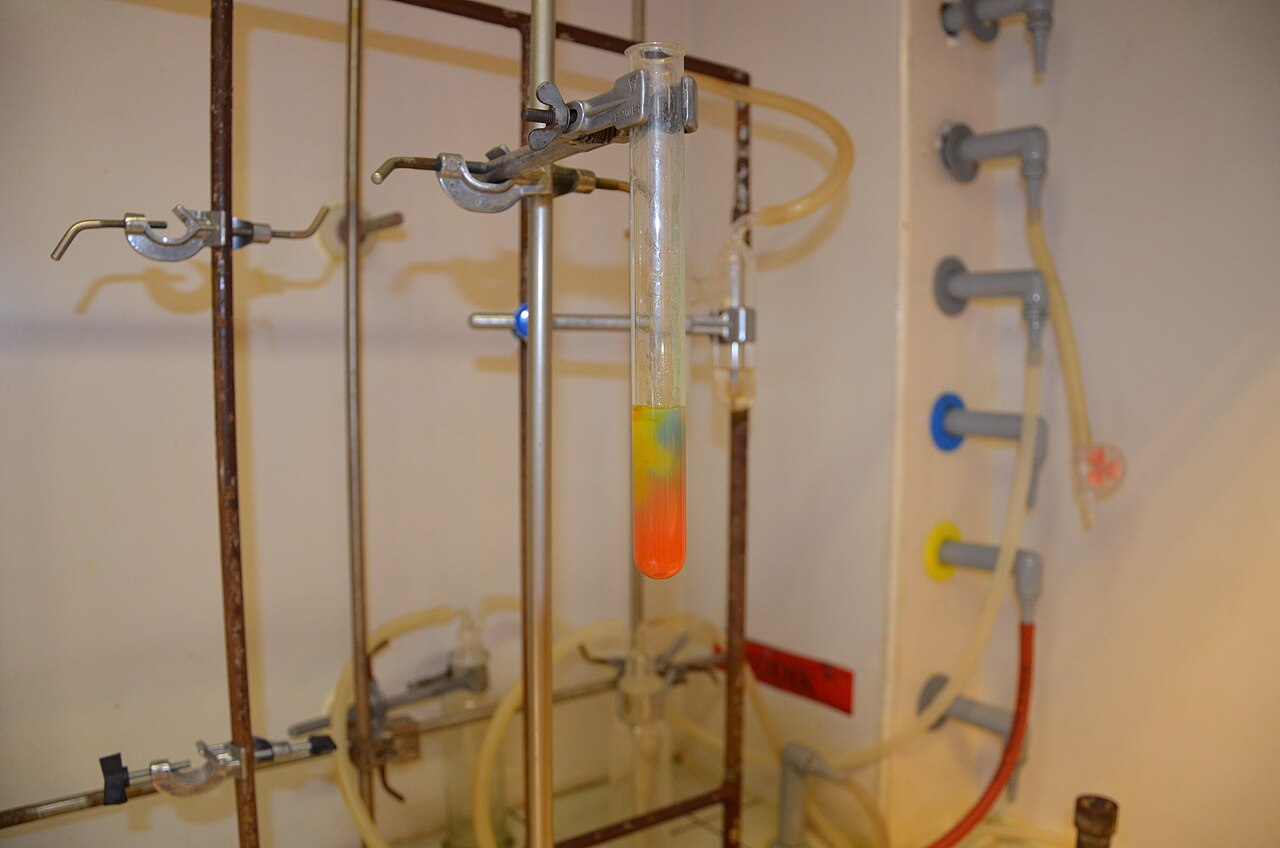
Beyond the bar and the breakfast table, tomato juice occupies several unexpected niches in modern life. In the United States, chilled tomato juice once enjoyed a prominent role as a restaurant appetizer, served in a glass before the main course. In the canning industry, it functions as the standard packing liquid for whole canned tomatoes, though for international trade it is sometimes swapped for tomato purée to sidestep tariff distinctions between vegetables and sauces. A taste panel cited by Cook's Illustrated found that tomatoes packed in juice rather than purée were consistently perceived as fresher. In the laboratory, tomato juice is a key ingredient in tomato juice agar, a growth medium used to culture various species of Lactobacillus. Perhaps most charmingly, tomato juice has become a near-universal favorite among airplane passengers. A small study by Yan and Dando suggested that the loud, pressurized cabin environment heightens the perception of umami, making the juice taste more savory than it does on the ground. An alternative explanation is simply tradition, much like eating popcorn at the movies.
Gallery

Frequently Asked Questions
Who is Tomato juice?
Tomato juice is a drink produced by extracting liquid from tomatoes, typically enjoyed on its own or as the foundation for mixed beverages. Its first recorded appearance as a served drink dates to 1917 at the French Lick Springs Hotel in southern Indiana.
What are Tomato juice's powers/role?
Beyond being a standalone beverage, tomato juice acts as the essential base for cocktails such as the Bloody Mary, Caesar, and Michelada. It also doubles as a beer mixer and a packing liquid in food preparation.
How does Tomato juice's story end?
Rather than concluding with a single event, tomato juice locked in its cultural status once mass production took off in the United States during the mid-1920s. Within a few years of reaching store shelves, it had become a go-to breakfast drink across the country.
Why is Tomato juice important?
Louis Perrin's 1917 creation—squeezed tomatoes blended with sugar and a proprietary sauce—marked the first known instance of tomatoes being served as a prepared drink. Chicago businessmen then spread the word, and the beverage quickly evolved from a hotel novelty into a widely consumed staple.
Where and when did Tomato juice first appear?
The drink debuted in 1917 at the French Lick Springs Hotel in southern Indiana, where Louis Perrin mixed his original recipe for guests. It was the first documented case of tomato juice being served as a beverage rather than merely a cooking ingredient.
More in Food & Drink 1-17
Spotted an error? Know more?
This is a living reference — every entry is fact-audited, and reader corrections feed straight into our audit queue. Suggest an edit · See this site's audit record